
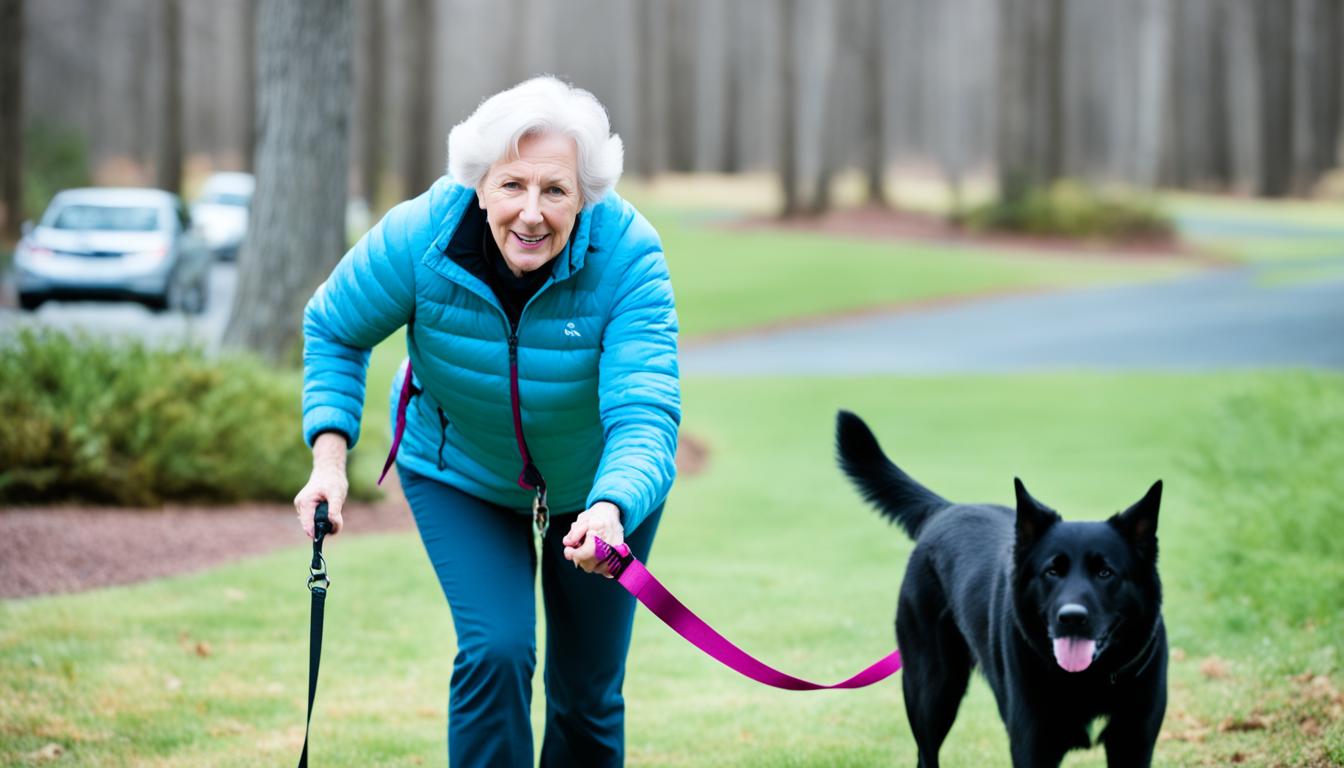
Ever felt like your dog is leading a sled team on walks? It’s a common issue many dog owners deal with. But, with the right leash training techniques and patience, walks can become enjoyable for both you and your dog.
Learning leash manners is key for safety and strengthening your bond with your dog. Proper leash training makes walks safer and more fun. Are you ready to learn some dog walking tips and start walking more smoothly? Let’s get started.
Quick Recommendation: Our blog is filled with tips and tricks for training your puppy or dog. If you're seeking a comprehensive training program, we recommend K9 Training Institute.
Introduction to Leash Training
Leash training is key for a well-behaved dog. It helps control your dog during walks and promotes good behavior. It’s important for every dog owner to start with leash training basics.
Many dog owners face issues like pulling on the leash, which can be tough. By learning puppy leash training early, you can make walks less stressful and more fun.
Starting leash training early has many benefits. It lays the groundwork for good habits and teaches your puppy right behavior from the start. Even older dogs can learn and improve with consistent training and guidance.
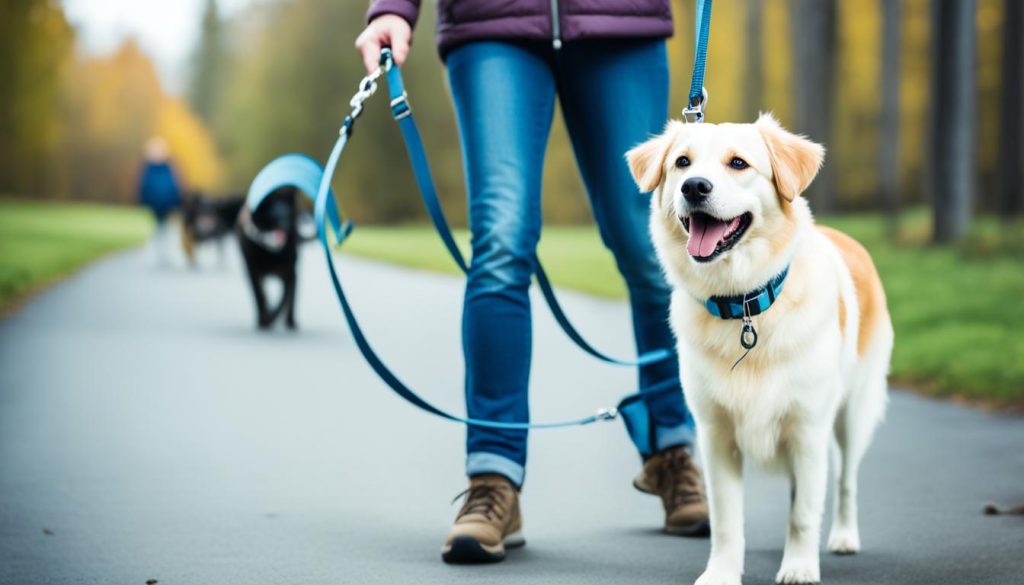
By focusing on leash training basics, you and your dog can have enjoyable, stress-free walks. Whether you’re training a puppy or an older dog, patience and consistency are crucial for success.
Choosing the Right Equipment
Choosing the right gear is key when training your dog. A no-pull dog harness is a must-have. It spreads the pressure evenly, reducing strain and stopping pulling. This makes training more effective.
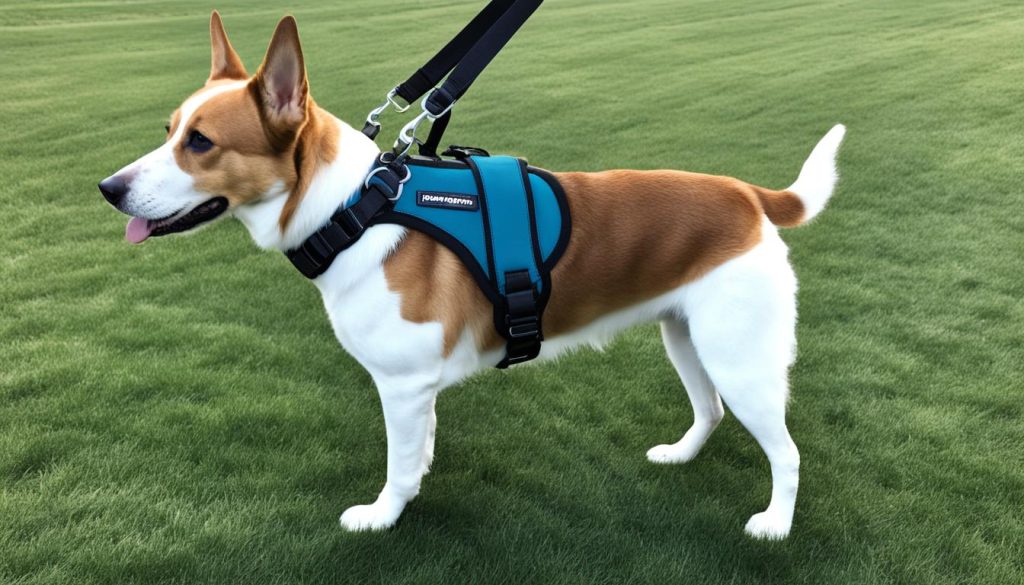
It’s important to know about types of dog leashes. You can find leashes made of nylon or leather, in various lengths. Each leash type has its own use. Retractable leashes give your dog more freedom but can be tough to manage. Shorter leashes help with control, especially when training.
Training collars are also vital. They come in prong, choke, and martingale types. Each has its pros and cons. Pick one that fits your dog’s size and personality. A good collar keeps your dog comfy and lets you correct bad behavior.
Always measure your dog before buying gear. A good fit is crucial for a no-pull harness or training collar. Bad fits can cause discomfort or injury, slowing down your training. The right gear makes training successful and keeps your dog happy and safe.
Quick Recommendation: Our blog is filled with tips and tricks for training your puppy or dog. If you're seeking a comprehensive training program, we recommend K9 Training Institute.
Starting with Basic Commands
Starting with basic dog commands is key for leash training. Begin with simple commands like “Sit,” “Stay,” and “Come.” These commands make training easier and strengthen your bond with your dog.
Positive reinforcement is key to teaching these commands. Use treats, praise, and affection to encourage good behavior. For example, give a treat and praise when your dog sits on command.
Adding leash training commands to your routine is step-by-step. Start indoors with no distractions to help your dog focus. Once they learn basic commands, add the leash and practice inside and outside.
Be patient and consistent for the best results. Short training sessions regularly will help your dog learn these commands well. This will prepare them for more advanced leash training.
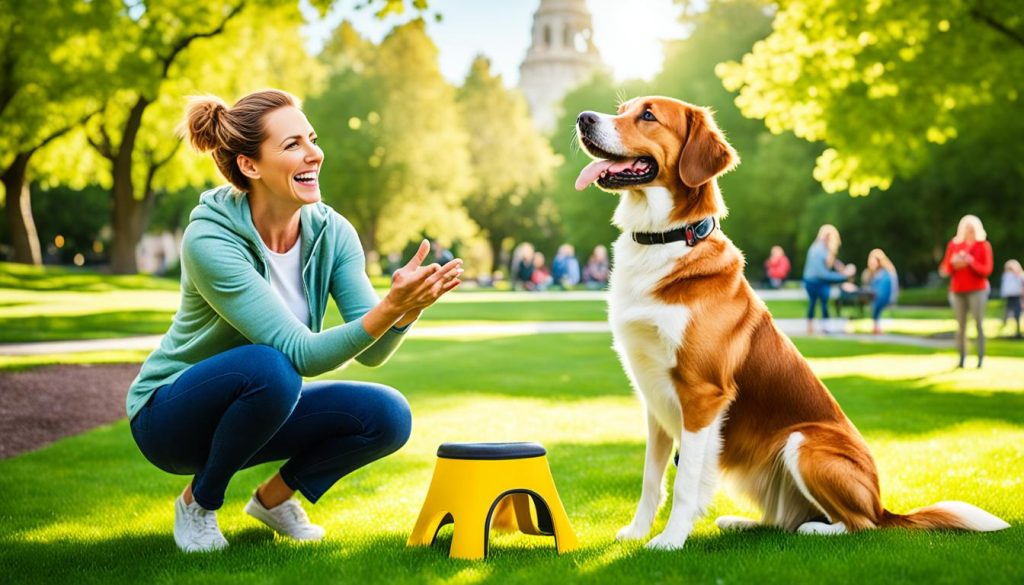
Training Your Dog to Not Pull on the Leash
Walking your dog without them pulling on the leash is key to a nice stroll. Start by standing still when they pull. This shows them that pulling doesn’t get them anywhere. When they stop pulling and the leash relaxes, give them a treat right away.
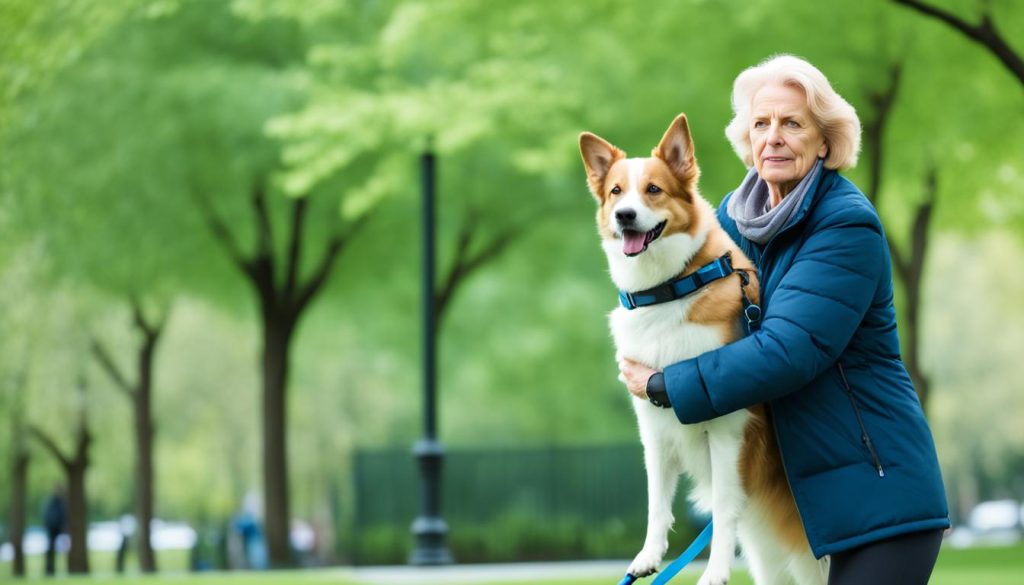
Try changing direction when your dog pulls too. This surprises them and makes them focus on you. Soon, they’ll learn that staying by your side makes for a better walk. Doing these exercises often will make your walks much nicer.
Using rewards is key to teaching good leash behavior. Always have treats or praise ready to give your dog when they behave. This way, they learn that following you means getting rewards, which is good for both of you.
Quick Recommendation: Our blog is filled with tips and tricks for training your puppy or dog. If you're seeking a comprehensive training program, we recommend K9 Training Institute.
Using Commands to Control Pulling
Teaching your dog commands like “Heel” and “Let’s Walk” can make leash control better. These commands help guide your pet, making walks fun and less stressful for you both.
Start with the “Heel” command by using treats or a favorite toy. Walk with your dog on a shorter leash and say “Heel” when they stay by your side. It’s important to do this in different places to help your dog learn the command well.
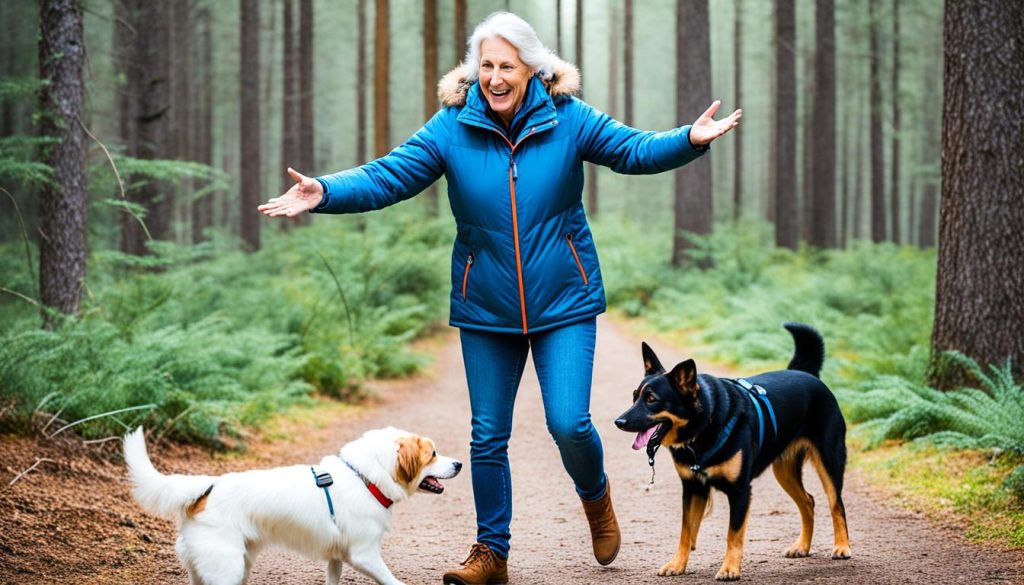
The “Let’s Walk” cue is also great for stopping pulling. Say it when your dog tries to pull ahead. Stop moving, let them come back, and then walk again when they’re calm. This teaches them that pulling doesn’t work, but staying close does.
Learning these leash control techniques takes time and patience. With regular practice, training your dog to not pull gets easier. Soon, your dog will know these leash cues well, making walks more enjoyable and controlled.
Consistency in Training
Having a daily training routine is key for effective dog training. It helps your dog know what you expect. A solid schedule makes sure your dog learns commands and behaviors well.
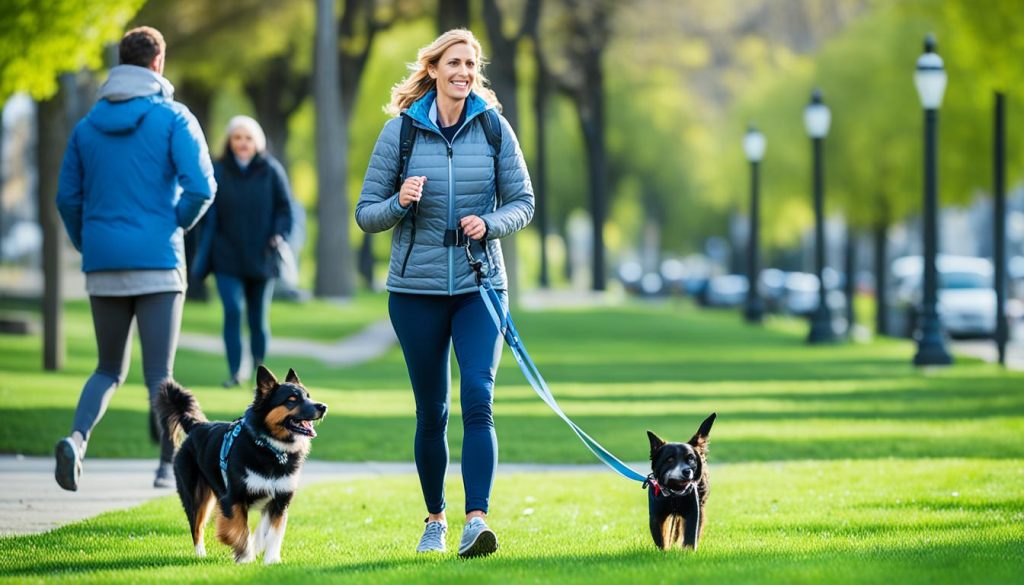
Adding training to your daily life makes it easier. For instance, practice “heel” or “sit” during your morning walk. Use meal times to work on “stay” or “wait,” teaching your dog to be patient and in control.
It’s important for everyone in the house to be on the same page. Make sure everyone uses the same commands and follows the same schedule. This way, your dog won’t get mixed up. A united effort makes training smoother and more successful.
Quick Recommendation: Our blog is filled with tips and tricks for training your puppy or dog. If you're seeking a comprehensive training program, we recommend K9 Training Institute.
Recognizing and Addressing Triggers
Understanding your dog’s behavior is key to leash training success. Start by figuring out what makes your dog pull. Things like other dogs, squirrels, loud noises, and new places can distract them. Watch how your dog reacts and note what triggers their pulling.
After spotting the triggers, you can start distraction training. This helps your dog pay attention to you, not the distractions. Begin with simple commands in a quiet place. Then, add more distractions as your dog gets better.
Behavioral training also helps your dog stay calm around triggers. Reward your dog with treats and praise when they ignore a distraction. Soon, ignoring distractions will become a way to get rewards, making walks better for both of you.
Advanced Leash Training Techniques
This section explores advanced dog training, focusing on leash training for dogs that know basic commands. A key method is loose leash walking, which makes walks more respectful and controlled.
Begin by making basic commands more solid while walking. Then, try new training methods like sudden turns or stopping. These exercises boost your dog’s quickness and focus.
Changing your pace is another good technique. Walk fast, then slow down without warning. This keeps your dog alert to your actions and their speed.
Adding distractions in a safe place is also helpful. Use a toy or someone else walking by as distractions. Give your dog treats for staying calm and focused.
The aim of advanced dog training is to improve your dog’s skills in different situations. This keeps them well-behaved and responsive on walks. With time and consistency, you’ll see the perks of loose leash walking and special training. It makes walks better for you and your dog.
Common Mistakes to Avoid
When starting leash training, many dog owners make common mistakes. One big error is being inconsistent with your commands and routines. Dogs need clear and consistent instructions. If not, they might get confused and start pulling again.
Not correcting bad habits right away is another mistake. If your dog starts pulling, stop walking and wait for them to calm down. This teaches them that pulling doesn’t work. Always reward good behavior to make it stick.
Using the wrong leash or harness can also slow down progress. Make sure you have the right gear for your dog’s size and breed. The wrong fit can cause discomfort, leading to pulling.
If your dog goes back to pulling after you’ve made progress, don’t lose hope. Dogs often test their limits. Stay calm and keep up with your training. Being consistent, patient, and quick to correct bad habits is key to success.
Conclusion
Learning to walk your dog on a leash takes time and effort, but it’s worth it. This guide has shown you how to pick the right gear and use advanced techniques. With patience and dedication, you and your dog can enjoy walks together.
Every walk is a chance to get closer to your dog. Training your dog to walk nicely means walks are fun and stress-free for both of you. Being consistent in your training helps manage pulling and makes walks enjoyable.
Leash training makes walks smoother and improves your dog’s behavior and listening skills. Keep up the good work and celebrate your progress. With time and love, you’ll enjoy walks with your dog without any trouble. This will lead to many happy times together.
Quick Recommendation: Our blog is filled with tips and tricks for training your puppy or dog. If you're seeking a comprehensive training program, we recommend K9 Training Institute.