
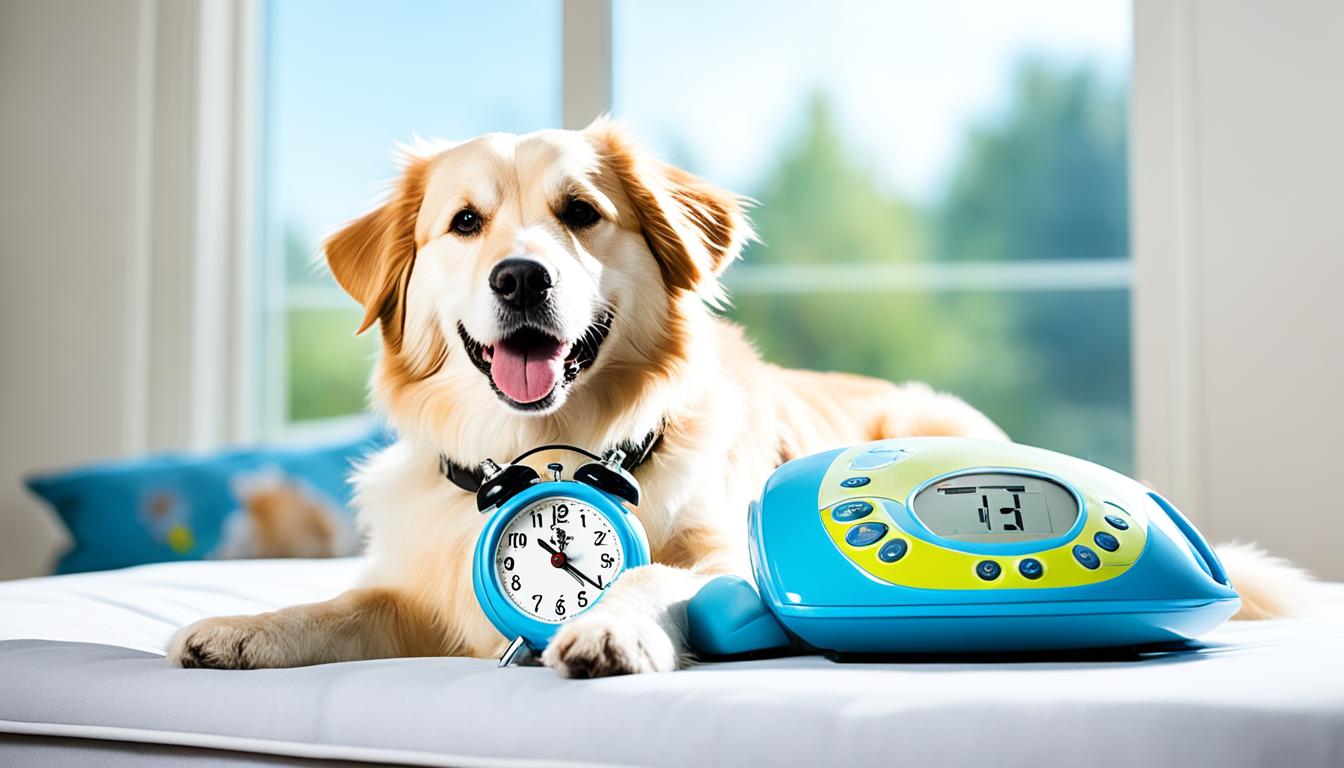
Ever wondered why your dog acts out when you leave? Separation anxiety is a common issue in dogs, causing them to behave badly. This can include a lot of barking or even damage to things. It’s tough for both you and your dog. But, you’re not alone. This article will give you tips on how to help your dog feel better when you’re away.
We’ll look at ways to help your dog feel less anxious when you leave. Being patient and understanding your dog’s needs is key. Our advice is here to help you and your dog live more peacefully.
Want to make your dog’s alone time less stressful? Let’s explore some ways to do that.
Quick Recommendation: Our blog is filled with tips and tricks for training your puppy or dog. If you're seeking a comprehensive training program, we recommend K9 Training Institute.
Understanding Separation Anxiety in Dogs
Separation anxiety in dogs is more than just bad behavior. It’s a serious issue that causes dogs to act out when left alone. Knowing what triggers this anxiety is key to helping your dog.
Things like sudden changes, moving, or a family member being away can trigger it. Dogs with separation anxiety may bark a lot, chew on things, or try to get out. It’s important to know this is not just normal dog behavior.
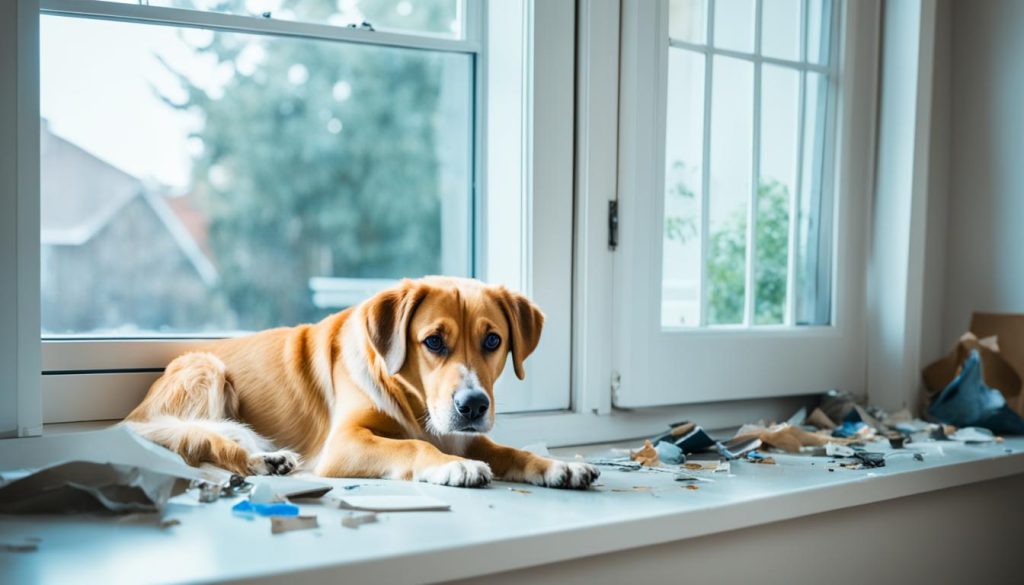
This knowledge helps you understand what your dog is going through. It’s the first step to easing their stress. By focusing on their feelings, you can help your dog feel better and stop their anxiety from getting worse.
Signs and Symptoms of Separation Suffering in Dogs
It can be hard to spot dog anxiety, but knowing the signs helps a lot. Dogs with separation anxiety may act out in different ways. Look for signs like a lot of barking or howling when they’re left by themselves. This is often their way of saying they’re upset.
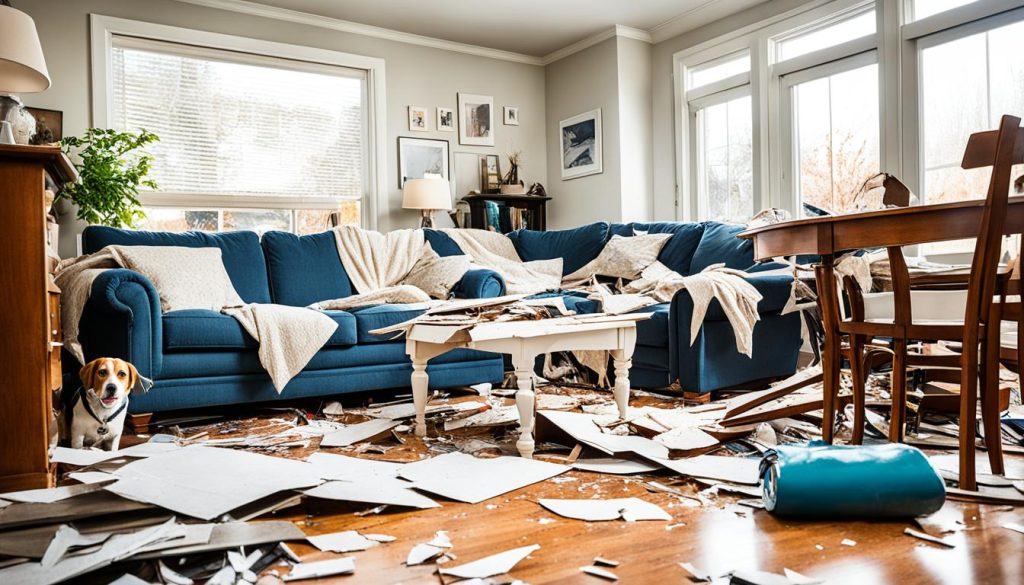
Some dogs also act out by chewing on things they shouldn’t, like furniture or shoes. This isn’t just bad manners; it’s a sign of their emotional state.
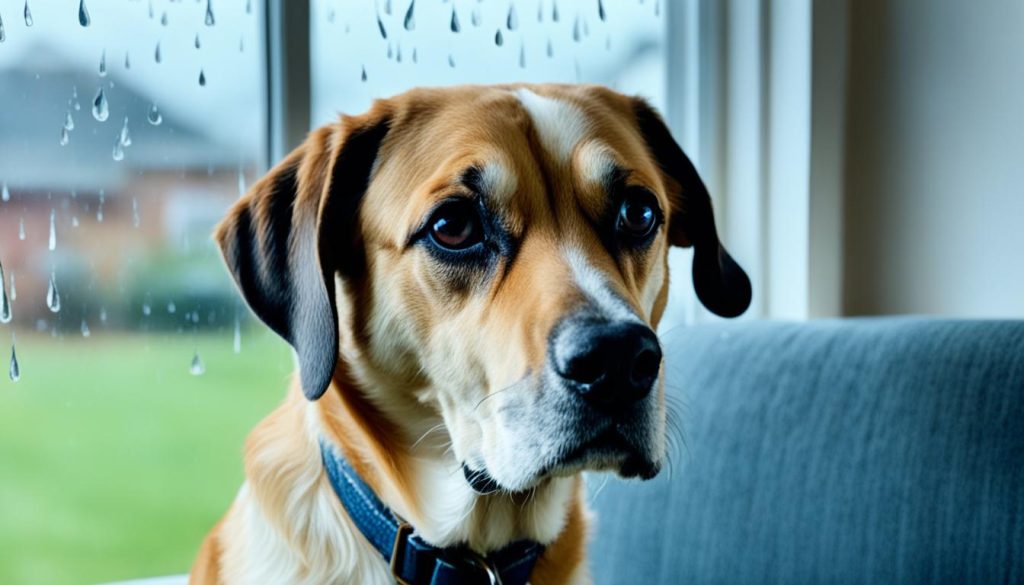
Some dogs might even urinate or defecate inside the house, even if they’re trained not to. This strange behavior is often linked to their stress and panic.
Watch for other signs too, like pacing a lot, trying to get out, or eating differently. Spotting these behaviors early helps you help your dog feel safe when you’re away.
Quick Recommendation: Our blog is filled with tips and tricks for training your puppy or dog. If you're seeking a comprehensive training program, we recommend K9 Training Institute.
Common Causes of Separation Anxiety
Understanding what makes dogs anxious when left alone is key. Many things can cause this, like changes in their home or daily life. For example, moving or changing their routine can make them stressed.
Bad experiences can also lead to anxiety. Dogs that have been left behind or moved a lot may feel anxious. Knowing what causes their stress can help you figure out why they act anxious.
Genetics also play a part. Some dogs are naturally more anxious and may struggle with being left alone. Understanding this can help you find ways to ease their anxiety.
Changes in the family can also affect a dog’s anxiety. Things like a new family member or the loss of one can make them anxious. It’s important to consider these changes when trying to help your dog.
Knowing what causes your dog’s anxiety is the first step to helping them. This knowledge helps you find ways to reduce their stress and make them feel more at ease.
Preparing Your Dog for Alone Time
Creating a safe and comfy spot for your dog is key when training them to be alone. Start by setting up a cozy area with their favorite toys and a comfy bed. This makes the space inviting and secure, helping to reduce their anxiety.
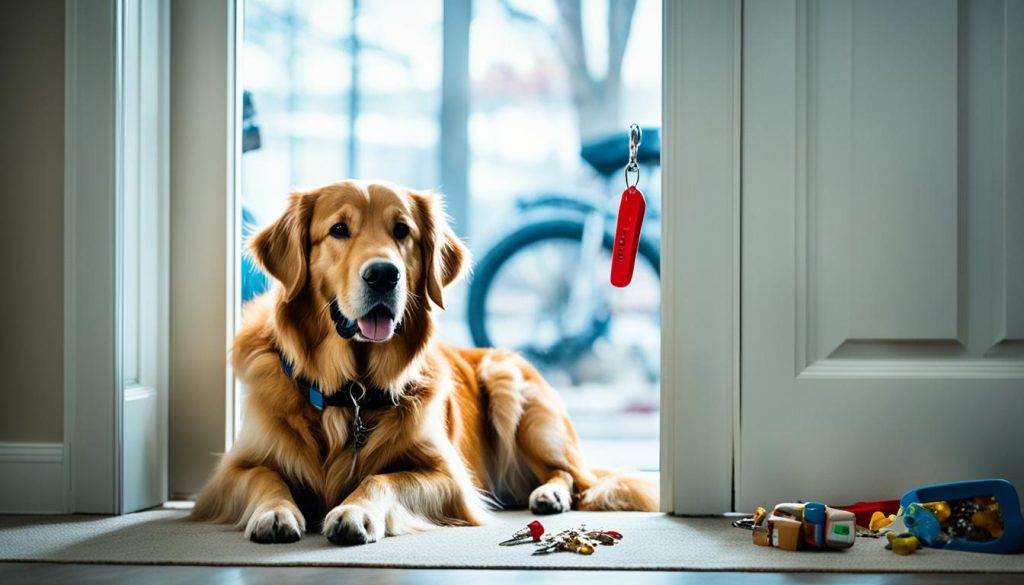
Start with short periods of alone time and gradually increase the time. This step-by-step method is great for anxious dogs. It helps them get used to being alone without feeling too stressed.
Remember to leave special toys or treat puzzles for them to enjoy. These can keep them busy and distract them from your absence. By making alone time positive, you’ll see a big improvement in your dog’s anxiety.
Quick Recommendation: Our blog is filled with tips and tricks for training your puppy or dog. If you're seeking a comprehensive training program, we recommend K9 Training Institute.
How to Handle Separation Anxiety in Dogs
Managing pet anxiety can be tough, but sticking to a regular routine helps ease stress in dogs. Feeding, walking, and playtime schedules are key. Dogs love routine, which gives them a sense of security.
Desensitization is a great way to tackle dog separation issues. Begin by leaving your dog alone for short times and slowly increase the duration. This helps your dog get comfortable with being alone, reducing their anxiety over time.
When you leave or come back, don’t make a big fuss. Avoid emotional greetings as it can make your dog more anxious. Stay calm and reward your dog for calm behavior instead.
Creating a safe space for your dog is also helpful. This could be a cozy corner with their bed and favorite toys. Making this space positive can help manage their anxiety.
Using interactive toys or treat-dispensing puzzles can also ease stress. These keep your dog busy and distracted while you’re away, lowering their stress levels.
Setting up a reward system for calm behavior is key. Use treats or favorite toys to praise your dog when they stay calm as you leave or return. Positive reinforcement builds security in your dog.
Implementing these strategies for dog separation issues takes time, patience, and effort. But with persistence and the right approach, you can lessen your dog’s separation anxiety. This creates a better environment for you and your furry friend.
Training Techniques to Reduce Anxiety
Positive reinforcement training is a great way to calm your dog. It rewards your dog for calm behaviors, making them want to do it more.
‘Stay’ training is a good method to reduce anxiety. You start with short times and increase it slowly. Use treats and praise to make it positive.
Signal training is also useful. Teach your dog a signal that means you’ll be back soon. This helps reduce worry by setting clear expectations.
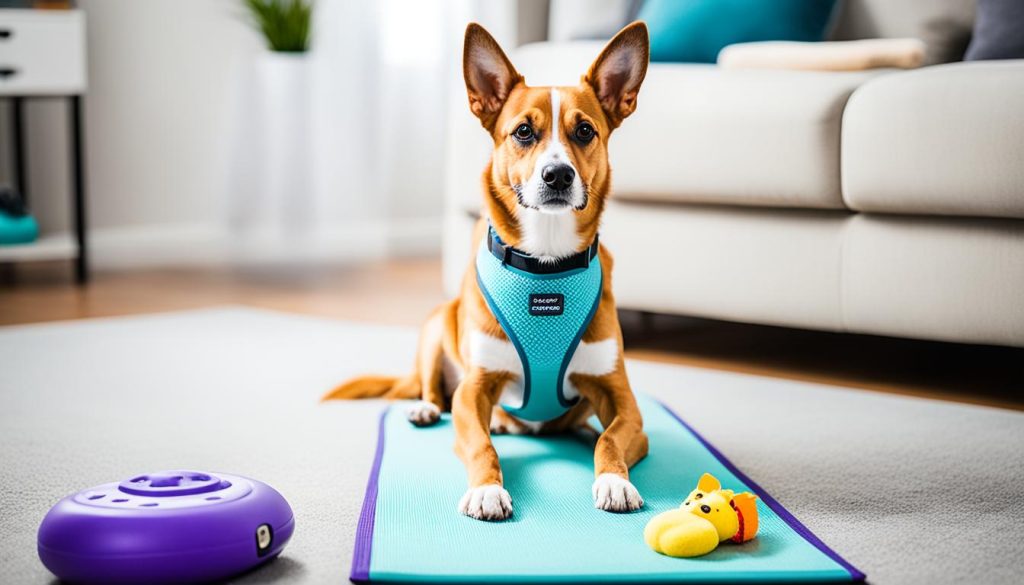
Crate training is key for changing dog behavior. It gives them a safe place to be. Use their favorite toys and bedding to make it cozy. Gradually get them used to being alone in it.
This helps ease their anxiety and gives them a safe spot when you’re away.
Success in training needs patience and consistency. Use these methods every day and focus on positive reinforcement. This will make your pet happier and calmer.
Quick Recommendation: Our blog is filled with tips and tricks for training your puppy or dog. If you're seeking a comprehensive training program, we recommend K9 Training Institute.
Using Natural Remedies and Supplements
Dealing with separation anxiety in dogs can be tough, but there are many natural ways to help. Adding calming supplements for pets to your dog’s daily routine can really cut down their anxiety. These options are safe, gentle, and work well to ease your dog’s symptoms.
Pheromone diffusers are a top choice for non-prescription anxiety relief. They release calming pheromones that make dogs feel safe and calm. Calming chews are also great, filled with natural stuff like chamomile and valerian root to calm your pet down.
Changing your dog’s diet can also help with anxiety. Foods high in omega-3 fatty acids, like fish oil, can calm them down. Plus, a balanced diet with the right vitamins and minerals helps their overall health and makes them more relaxed.
Every dog is different, so you might need to try a few things to see what works best. Always talk to your vet before trying new supplements or changing your dog’s diet. This ensures you’re doing what’s best for your furry friend.
When to Seek Professional Help
Dealing with separation anxiety in dogs can be tough. Sometimes, what you do at home isn’t enough. It’s key to know when you need help. Look for signs like constant destructive behavior, non-stop barking, and depression that doesn’t get better with training.
Experts like professional dog trainers and behaviorists can really help. They offer special training methods for your dog’s needs. They’ll look into your dog’s behavior, history, and what triggers their anxiety. This helps them create a plan that works.
They might suggest medication to help with the anxiety. Your vet can give you advice and prescribe the right meds. It’s important to follow their advice and watch how your dog reacts to the treatment. Getting help from pros means your dog can live a happier life with less stress.
Building a Strong Bond with Your Dog
Building a strong bond with your dog is key to managing separation anxiety. Start by spending quality time together. Activities like playing, exercising, and training strengthen your bond. These activities keep your pet happy and help you connect better.
Understanding your dog’s needs is important for trust. Positive interactions and knowing what they want help build trust. This trust leads to a secure bond, making your dog feel less anxious.
It’s crucial to listen to and understand your dog’s way of communicating. Pay attention to their body language and respond to their cues. This shows them you’re a trustworthy source of comfort and care. Regular, calm times together help build a strong bond, lowering anxiety.
Keeping a consistent routine also helps your bond with your dog. Dogs like knowing what to expect, which makes them feel safe. Regular times for feeding, walking, and playing make your bond stronger and anxiety-free.
Conclusion
Dealing with separation anxiety in dogs can be tough, but you can help. This article has given you a full guide on how to help your dog. It covers signs, training, and natural ways to ease their stress.
Using the right strategies can make your dog feel more secure when you’re away. Remember, being consistent and patient is crucial. A strong bond with your dog makes them feel safe, even when you’re not there. This also deepens your connection.
If your dog’s anxiety doesn’t get better, don’t hesitate to get help. Experts like vets and dog behaviorists can offer great advice and support. They can help you find the best way to help your dog.
Being a supportive owner means always learning and paying attention to your dog’s needs. By using the tips from this article, you can help reduce your dog’s separation anxiety. This will make their life happier and healthier. Keep learning, stay alert, and always put your dog’s well-being first.
Quick Recommendation: Our blog is filled with tips and tricks for training your puppy or dog. If you're seeking a comprehensive training program, we recommend K9 Training Institute.