
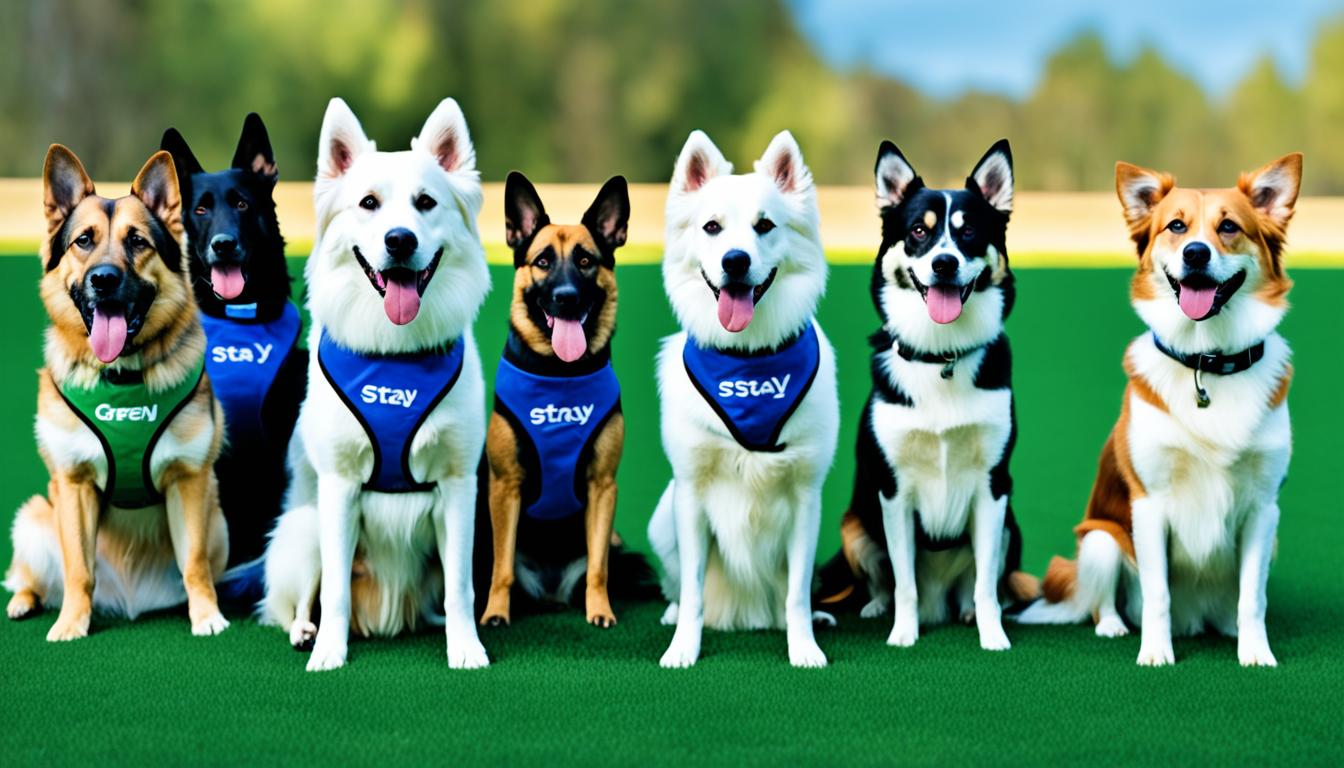
Ever wondered why some dogs are super well-behaved while others seem to cause trouble all the time? The trick is mastering essential commands.
Learning basic dog training isn’t just for fun tricks. It’s about keeping your pup safe and having a peaceful home. By teaching these key commands, your pet will behave better and have fewer issues.
It’s crucial to train your dog, not just something nice to do. But which commands are the most important for every pet owner to teach? Let’s explore the top five commands for managing your dog’s behavior effectively.
Quick Recommendation: Our blog is filled with tips and tricks for training your puppy or dog. If you're seeking a comprehensive training program, we recommend K9 Training Institute.
Why Teaching Commands to Your Dog is Important
Teaching your dog commands is much more than convenient. It’s a key part of responsible pet ownership. This ensures your dog is kept safe and improves the bond between you and your furry friend.
One big reason to teach them commands is for dog safety. The “Stay” command can keep them out of the road. This simple action could save your dog from getting hit by a car. “Leave It” can also stop them from eating something harmful.
In addition, training improves dog social skills. A dog that obeys commands can join in on more activities. They’re less likely to cause any trouble and more pleasant to spend time with. Training also makes outings more fun for both of you.
Good training means you can communicate well with your dog. When they understand your commands, it’s easier to connect. This clear line of communication reduces problems. It makes your lives together better and happier.
Studies show that a well-trained dog is good for responsible pet ownership. The American Kennel Club found that trained dogs are less likely to be given up. This shows that training not only helps your dog. It also makes things better for you as the owner.
Basic Commands to Start With
When you’re starting with beginner dog training, focus on the basics. These are key for later obedience and good behavior. They help you talk clearly with your dog.
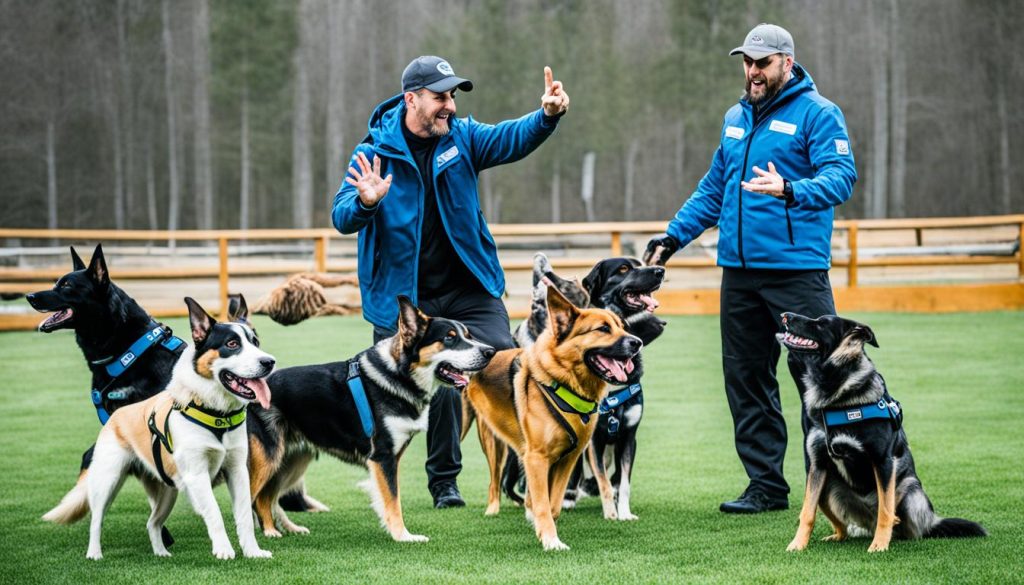
The first command to teach is “Sit.” It’s easy and very helpful. Your dog learns a positive action for many situations. This is good for keeping them safe and disciplined.
Next is the “Stay” command. It tells your dog to wait in one spot. It’s important for safety or when you need them to not move.
“Come” is very important too. It makes your dog return to you quickly. It’s a crucial safety command.
Then, start with “Down.” It’s about getting your dog to lie down. It helps with calmness and managing them well.
Lastly, “Leave It” is key for their safety. It teaches them to resist things they shouldn’t touch, like harmful items. This keeps them safe.
Consistent practice and patience are crucial for these commands. But, the effort pays off. You and your dog will be ready for more advanced training later on.
Quick Recommendation: Our blog is filled with tips and tricks for training your puppy or dog. If you're seeking a comprehensive training program, we recommend K9 Training Institute.
Sit
“Sit” is a basic command in dog training. It is the first step to train your dog and a key to good behavior. To start, gather some treats and be patient.
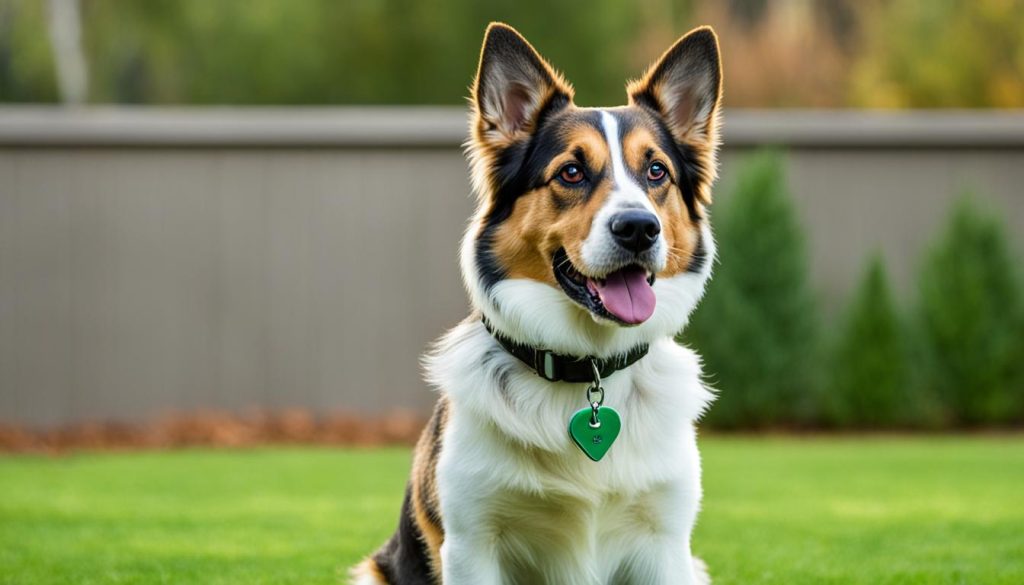
Hold a treat near your dog’s nose. Move the treat up slowly, making your dog look up and naturally sit. Praise them and give the treat when they sit.
Do this often but for short periods. It’s important to be consistent and use the same commands and methods. Avoid confusing your dog by having everyone use the same rules.
Don’t worry if your dog doesn’t sit right away. Some dogs need more time to learn new things. Keep guiding them and use positive rewards. This will help them a lot.
Change places to teach “Sit”, so your dog learns to do it everywhere. It’s good practice to make them understand the command in any situation.
Use “Sit” in your everyday activities. For example, ask them to sit before eating, walking, or playing. Regular practice makes the command become a habit for them.
Teaching your dog to sit is more than just training. It’s about creating a stronger bond with your pet. With these methods, your dog will know how to behave well in all sorts of places.
Stay
Teaching your dog to stay is key for keeping them safe. It’s also super handy in many daily scenarios. Teaching the stay command is part of dog patience training. This helps your dog with discipline and self-control.
First, make your dog sit to start the stay command. When they’re sitting, say “stay” in a clear and relaxed voice. Then, step back a bit. If your dog doesn’t move, give them a treat and some loving words. If they do move, gently guide them and start over.
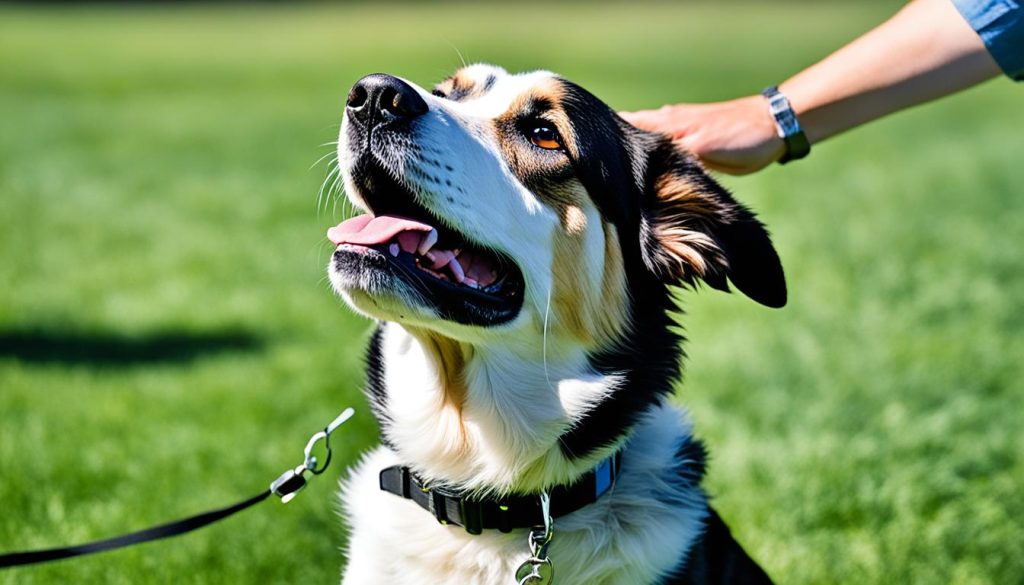
Keep making the stay harder by adding more distance and time. Begin very close and with stay times that are short. Then, increase how far you step away and the time they stay. This builds up their ability and understanding of the stay command.
Another important aspect of dog patience training is the release cue. This tells your dog when they can stop staying. Use words like “okay” or “release”. Being consistent with the release cue teaches your dog when to stop waiting.
It takes effort, but teaching your dog to stay is worth it. Your outings and daily life with your dog will be smoother and safer. It’s all about practice and patience.
Come
The “Come” command is key in training your dog and keeping them safe. It’s like a safety net, ensuring your dog comes back to you when called. This can prevent them from running into danger.
When teaching this command, being consistent is crucial. Use clear signs and reward your dog when they come back. This builds a positive connection to the word ‘come’.
Starting training at home with few distractions can set a good foundation. And, as your dog gets better, add more distractions. Using treats they love will keep them motivated during training.
Since dogs love to explore and can easily get distracted, training can be tough. But, with regular practice in different places, your dog’s focus will improve. It takes time and effort, but your dog will learn to come back reliably.
Down
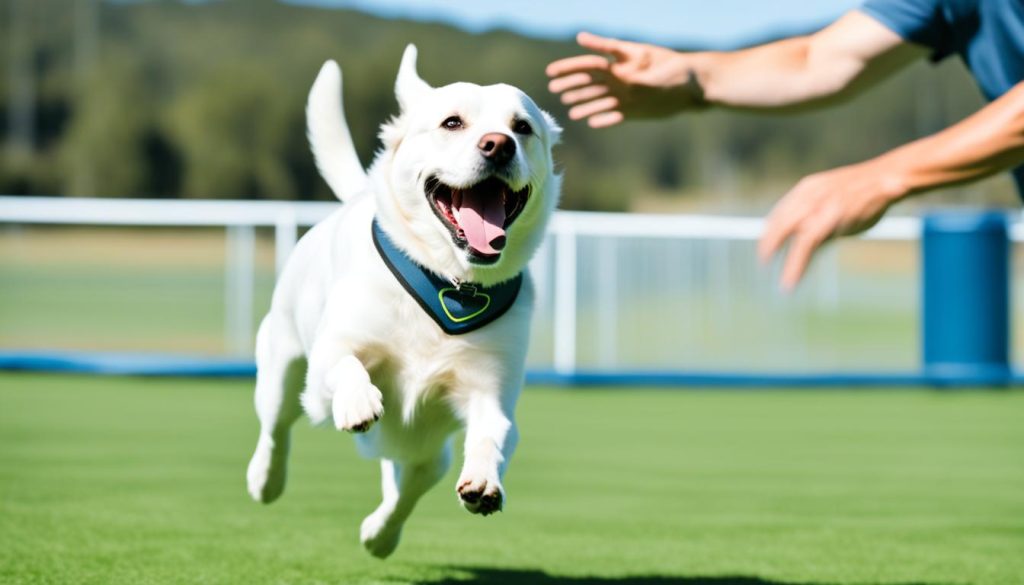
The “Down” command is crucial in dog training. It helps maintain control and calm an overexcited dog. It also strengthens the bond between you and your dog. This shows the dog their place in your home.
Teaching the down command is easy. Begin with a treat to catch your dog’s interest. Lower the treat to the floor slowly. When your dog lies down, give them the treat. Don’t forget to offer plenty of praise. Repeat this often to teach them consistently.
Using hand signals can also aid in training. Point your finger down while saying the “Down” command. This visual cue helps your dog understand quickly.
The “Down” command is useful in many situations. It helps calm a dog in public places. It’s also the first step for more complex tricks and training. This command builds obedience and fosters positive dog behavior.
Quick Recommendation: Our blog is filled with tips and tricks for training your puppy or dog. If you're seeking a comprehensive training program, we recommend K9 Training Institute.
Leave It
Teaching the leave it command is key to your dog’s safety and good behavior. It helps dogs learn self-control to avoid bad or dangerous stuff. This makes sure your dog won’t pick up harmful things or act in ways you don’t want.
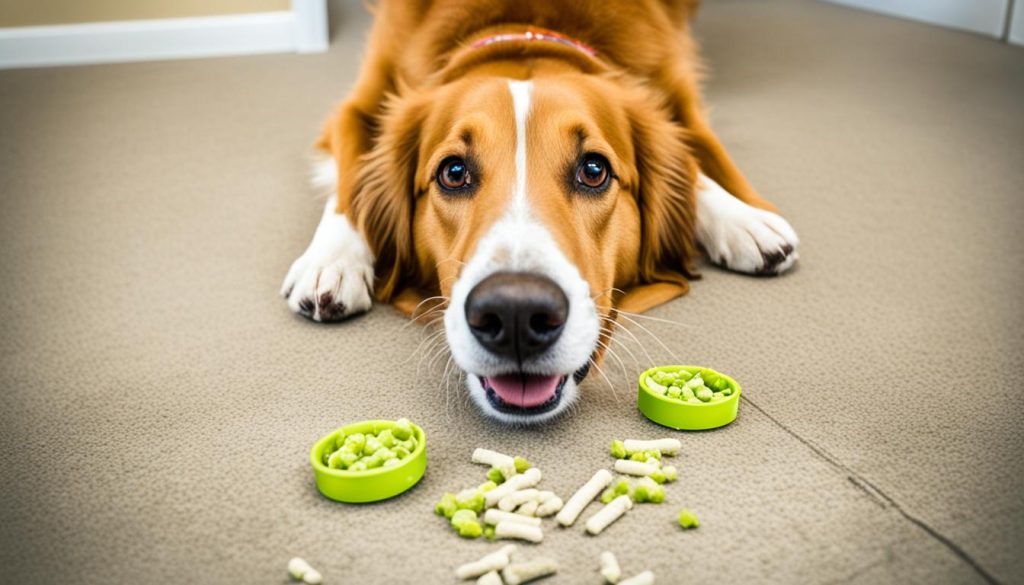
When you teach your dog to “leave it,” you’re telling them to stop and think. They learn not to rush into dangerous or rude actions. This could be not eating food that’s not theirs, not bothering other animals on walks, or not playing with things that could hurt them.
Start by showing your dog a treat and firmly saying “leave it.” If they don’t touch the treat, give them a different one. Practice this often, adding more distractions over time. This helps your dog learn to control themselves, even when they really want the treat.
Adding the leave it command to everyday moments can make your dog more well-behaved. It’s a great way to make sure your dog doesn’t do things that could be harmful. Plus, it teaches good behavior.
Heel and More: Adding to Your Training Repertoire
Now, we move past the basics and into advanced dog training. It’s time to introduce the heel command. By teaching this, your walks will be better and you’ll have more control, especially in busy areas.
The heel command makes your dog walk smoothly next to you. They won’t pull on the leash. This is great for walks in busy or crowded places. Adding the heel command will change your walking experiences for the better, both for you and your dog.
Teaching your dog new commands like “heel” is also great mental exercise. It keeps them engaged and avoids boredom. Mastering these tricks can also help with better behavior overall, making life less stressful for you both.
Think about adding more than just the heel command. Multiple commands help with obedience and your dog’s happiness. They’ll be well-behaved everywhere, from your house to public spots.
Conclusion
Teaching your dog key commands is a journey, not a one-time task. It’s about maintaining and growing the lessons for life. By using commands like sit, stay, come, and heel regularly, you build a strong bond with your pet.
Training your dog goes on forever. It helps both of you understand each other better. The secret to training? Be persistent, stay calm, and be positive. Every time you and your dog interact, it’s a chance to reinforce good behaviors.
Dogs love learning new things. It keeps them happy and healthy. As you teach your dog new commands and find fun activities, you’re giving them a great life. Training is not just teaching; it’s a journey that makes your home better.
Quick Recommendation: Our blog is filled with tips and tricks for training your puppy or dog. If you're seeking a comprehensive training program, we recommend K9 Training Institute.